
Wētā in the woods
Wētā live a quiet life – hiding out during the day and coming out to feed at night. There are 100 different species in New Zealand, including the tree wētā
At Living Springs we commonly see two types of wētā: the Canterbury tree wētā (Hemideina femorata) and the cave wētā (Pleioplectron simplex). Tree wētā, as their name suggests, hang out in wooded areas. They like dark, cool places and spend the day sheltered inside old and decaying wood. They like to crawl into holes and crevices made by beetles or moth larvae and these galleries are where they will roost and mate. You can sometimes find a male with a harem of several females in one gallery. We use mimics of these galleries, sometimes called ‘wētā hotels’ or stations, to be able to monitor our wētā residents. We have 18 stations in all, distributed across the Livings Springs site and we check them once a year.
Wētā populations are extremely difficult to monitor due to their stealthy behaviour – they are good at hiding in their natural habitats. The Living Springs wētā hotels help us take a small picture of absence/ presence not density. We also have 75 tracking tunnels across the site to monitor for pest species, and we often find wētā footprints showing up in these, which is a positive sign. Wētā are an important species for measuring the health of the forest, as they require certain trees to feed from such as māhoe and kanuka.
The main threat to wētā are cats and hedgehogs who make a crunchy snack out of wētā. So we know that the numbers of wētā in our grounds are likely to improve as we deter and eradicate the predators. Click this link to see the latest results of our pest monitoring.
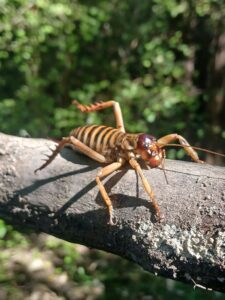 Life as a tree wētā
The tree wētā lives for up to 3 years. In April and May the adult wētā will mate and the female lays around 200 eggs. She uses her long, curved egg-laying spike (ovipositor) to push the eggs into the damp soil of the forest floor. The eggs hatch out in spring and the small, wingless juveniles set off in search of food (mainly leaves, flowers, seeds and fruit). As they grow they need to shed their hard external covering (exoskeleton) and over the course of 2 years they will go through around 10 moults before reaching adulthood. Finding the discarded exoskeletons in your garden is a sure sign that you’ve got wētā! You can also look out for nibbled māhoe leaves (their favourite food).
Adult tree wētā are around 6cm long, which is a pretty impressive sight. But if you do find one, give it some space. If it raises its legs up, it is showing you it is alarmed - and they are known to bite! Take a photograph and then allow the wētā to return to shelter. Some of New Zealand’s wētā species are among the largest insects in the world, the wētāpunga being sometimes the size and weight of a mouse! Read how this endangered species is being brought back from the brink of extinction in Aucklands Hauraki Gulf.
If you think you might have wētā in your garden, you can purchase wētā hotel from Zealandia while the Department of Conservation has advice for building your own.